
Pre-formed Zirconium Crowns
Strong, Natural-Looking Crowns

Pre-formed zirconium dental crowns are durable, long-lasting and look like natural teeth.

Pre-formed Zirconium Crowns | Dentist
Are You Ready to Arrange an Appointment?
Contact Us

Pre-formed Zirconium Crowns

Zirconium crowns are increasingly being used in paediatric dentistry across the globe.
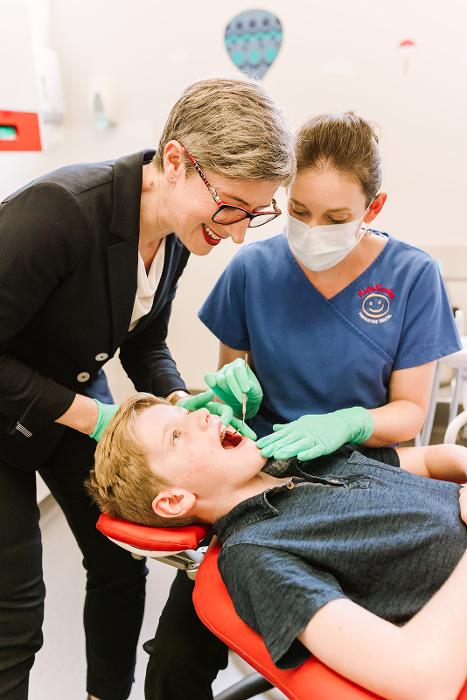
Crowns are prefabricated with multiple sizes and shapes available for all teeth. They are an extremely durable restoration and as such are an invaluable material for paediatric dentists.

Indications for Zirconium crowns in deciduous (Baby Teeth):

  • Teeth Fractured due to trauma
  • Teeth with large carious lesions (holes)
  • Teeth that have had pulp therapy
  • Where the quality of the remaining tooth structure is poor (hypomineralized)
  • Teeth with excessive wear (due to erosion or grinding habits)
  • Children who require general anaesthesia for dental care
  • Children with a high decay rate

Placement of Zirconia crowns
Zirconia crowns are cemented to the teeth using dental cements. This may be done using local anaesthetic or as a part of treatment under general anaesthesia.
Crowns go over the remaining tooth and restorative material inside the tooth.
Deciduous (baby) teeth with Zirconia crowns will normally exfoliate (Fall out) spontaneously.

Cleaning, care and maintenance of Zirconia crowns

  • Zirconia crowns are cemented to the teeth but may become de-bonded
    particularly with hard or sticky food (muesli bars, confectionary)
  • Teeth treated with a Zirconia crown still need thorough brushing and flossing to
    maintain tooth and gum health
  • Teeth should have radiographs (x-rays) at least every two years to monitor the underlying tooth

Frequently Asked Questions

  • Zirconia crowns are cemented to the teeth but may become de-bonded
    particularly with hard or sticky food (muesli bars, confectionary)
  • Teeth treated with a Zirconia crown still need thorough brushing and flossing to
    maintain tooth and gum health
  • Teeth should have radiographs (x-rays) at least every two years to monitor the underlying tooth

Meet Our Clinicians:

Dr William Tang
Paediatric Specialist

Dr Will graduated in 2010 from the University of Sydney with a Bachelor of Dentistry. After graduation, Dr Will worked for several years in the wider Newcastle region before returning ...

Dr Nivethanan Kamalendran
Paediatric Specialist

Dr Niv is a registered specialist paediatric dentist who completed undergraduate training in India and his specialist training in Paediatric Dentistry at the University of Otago in New Zealand.

Before moving ...

Dr Helen Cornwell
Paediatric Specialist

Dr Helen completed her Bachelor of Dental Surgery in Adelaide and specialist training at the highly regarded University of Melbourne, where she became a Fellow of the Royal Australasian College ...

Are You Ready to Arrange an Appointment?
Contact Us